
In Vista, the House Doesn't Decide Your Well-and-Septic Timeline. Your Loan Does.
August 27, 2026
August 27, 2026
Picture two buyers writing offers on the same house in Gopher Canyon this month. Same list price, same three-acre lot, same avocado trees out back, same private well and septic system serving the property. One buyer is putting 20 percent down with a conventional loan. The other is using VA financing.
The conventional buyer might close in the standard 30 days without a single well or septic test ever entering the file. The VA buyer is required to test the water for bacteria and nitrates and, in most cases, get a full septic inspection before the loan can fund, regardless of how the property looks on the day of the walkthrough. Same roof, same soil, same well. Two completely different paths to the closing table.
That gap catches buyers off guard more often than the well or septic system itself does. If you're looking at property in Vista's rural pockets, the first thing worth understanding isn't the condition of the system. It's which rules apply to your financing.
Conventional loans backed by Fannie Mae or Freddie Mac are the most forgiving of the three. Under their guidelines, a well or septic inspection is only required if the appraiser or another party flags a visible problem. No flag, no inspection. Many conventional buyers close on well-and-septic homes having never ordered either test.
FHA and VA loans work differently. HUD's FHA handbook requires the appraiser to examine the septic system for signs of failure and sets specific setback rules: a septic tank must sit at least 50 feet from any well, and drain fields need 75 to 100 feet of separation. VA loans don't require public water or sewer, but they do require the water to test safe for coliform bacteria and nitrates, and a septic inspection is triggered whenever an appraiser notes a concern, the lender requires one, or the county mandates it at time of sale. On rural properties, one of those triggers almost always applies. Water test results are typically only valid for about 90 days from certification, which means timing the test close to your appraisal matters more than people expect.
Here's how that plays out across the three most common paths:
| Loan Type | Well/Septic Inspection | What Triggers It |
|---|---|---|
| Conventional | Not required by default | Only if appraiser or inspector flags an issue |
| FHA | Required | Appraiser checks for failure signs; setbacks enforced |
| VA | Required | Appraiser concern, lender condition, or county rule at sale |
None of this means a well-and-septic home is riskier to finance with FHA or VA. It means the paperwork and the calendar look different, and building an offer without knowing that difference is how earnest money gets tied up in a contingency deadline nobody planned for.
Vista isn't one market for this purpose. It's two, sitting inside the same city limits.
South of downtown, Shadowridge is a master-planned community of more than 2,100 single-family homes and roughly 400 condos spread across 30-plus HOA-governed neighborhoods, built around Shadowridge Golf Club since 1981. Every home there sits on municipal water and sewer. Property tax runs close to 1.11 percent with no Mello-Roos assessment layered on top, and the closing process looks the way most buyers expect it to look.
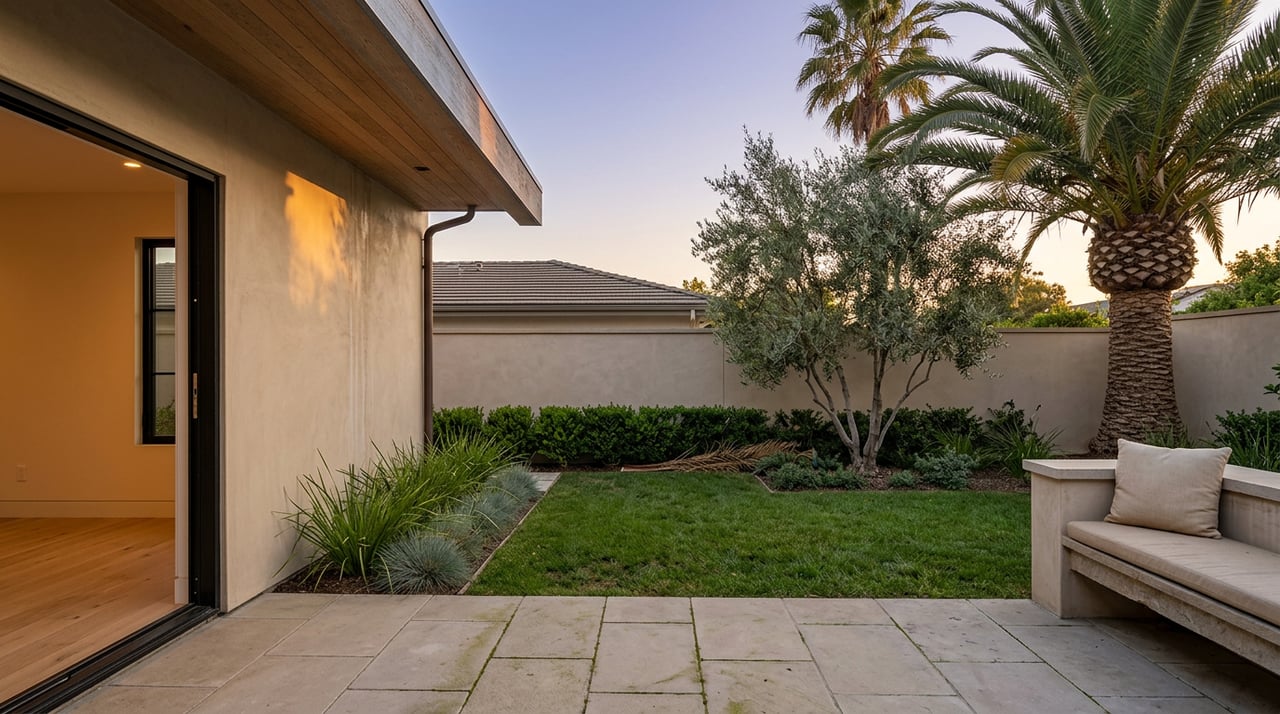
Move north and east into Gopher Canyon, Buena Creek, Elevado Hills, or Coronado Hills, and the infrastructure changes completely. Listings in these areas routinely mention private wells, septic tanks with fresh certifications, and irrigation setups built for avocado groves rather than front lawns. Zoning in these pockets often falls under Rural Residential or General Agricultural designations, which is part of why municipal utilities never got extended out there in the first place. Some of these parcels come with water meters already installed and paid for. Others expect the next owner to drill a well from scratch.
Two water agencies split coverage in ways that matter once you're comparing specific addresses. Vista Irrigation District serves most of the city and about 133,000 residents, drawing from sources that include Lake Henshaw and the Carlsbad desalination plant. But Rainbow Municipal Water District covers a rural slice of Vista along with unincorporated Bonsall, Pala, and parts of Oceanside and Fallbrook, and any wastewater it collects gets piped to Oceanside's San Luis Rey treatment plant rather than treated locally. Which agency, if either, actually serves a given parcel is a question worth answering before you fall in love with the acreage.
A standard home inspection does not evaluate a septic system in any depth. What San Diego County transactions typically rely on instead is a septic certification, which goes considerably deeper. The process usually includes a visual and structural check of the tank's baffles, lids, and risers, followed by pumping the tank so the interior can be inspected for cracks or buildup. From there, a hydraulic load test simulates real household water use to see whether the leach field absorbs it properly or shows signs of surfacing effluent. The county's Department of Environmental Health and Quality also cross-checks the system against its own permit records to confirm it was installed and sized correctly for the property.
California doesn't have a single statewide law forcing every seller to get this done before closing. But in practice, lenders, buyers, and escrow companies request it often enough in San Diego County that skipping it tends to slow a deal down rather than speed it up.
The dollar figures here are modest until they aren't. A professional well inspection in San Diego County typically runs $300 to $600 and covers pump function, flow rate, and a basic visual check. Add lab testing for bacteria and nitrates and the price climbs slightly, but it's still a rounding error compared to what happens if something fails. A failing pump can run over $3,000 to replace. A well that needs full rehabilitation can cost $5,000 to $15,000. Buyers who discover water quality problems after they're already in contract often ask for $5,000 to $20,000 in credits, or walk away entirely.
None of those numbers are the real cost, though. The real cost is calendar time. Flow tests and lab results don't happen instantly, and if your loan requires them, that clock is running against your contingency period whether you've accounted for it or not. A buyer who assumes a well-and-septic home closes on the same timeline as a Shadowridge condo is the buyer most likely to ask for an extension mid escrow, and extensions are exactly what sellers with backup offers don't like granting.
If you own one of these rural-zoned Vista properties and you're thinking about listing, the fix is straightforward: get the well inspected and the septic system certified before a buyer's lender forces the issue. Pull the well permit and drilling log from the county's environmental health records, gather any past water quality tests, and have flow rate documentation ready. A completed septic certification does more than satisfy an FHA or VA underwriter. It also takes negotiating leverage off the table, because a buyer who already has clean paperwork in hand has far less room to ask for a price reduction over a system nobody has actually inspected yet.
Selling one of these homes to the widest possible buyer pool, whether they're paying cash, going conventional, or using VA or FHA financing, starts with having the answers ready before anyone asks the question.
Does every home in Vista use a well and septic system? No. Most of the city, including the entire Shadowridge area, is on municipal water and sewer through Vista Irrigation District. Well and septic systems are concentrated in the rural-zoned pockets to the north and east, including Gopher Canyon, Buena Creek, Elevado Hills, and parts of Coronado Hills.
Can I use FHA or VA financing on a home with a shared well? Yes, but expect more documentation. Shared wells require a recorded agreement between the properties involved and a permanent easement guaranteeing access for repairs, and the well has to prove it can supply safe water to every home it serves at the same time.
How much extra time should I build into an offer on a well-and-septic property? It depends on your loan and the property's existing paperwork. If a septic certification and recent well test already exist, a conventional or even an FHA/VA closing can move close to a normal timeline. If those documents don't exist yet, plan for the scheduling and lab turnaround to add real weeks, not days, to your contingency period.
Vista's rural side offers something the coastal parts of North County simply can't: real acreage, working land, and a kind of privacy that's hard to find closer to the water. It just comes with a different set of questions than a standard resale, and the right answers depend on the specific parcel, the specific loan, and the specific paperwork already on file. If you're looking at a property in Gopher Canyon, Buena Creek, or anywhere else in Vista's rural pockets and want to understand exactly what your financing will require before you write an offer, Gina Riddle can walk through it with you.
Stay up to date on the latest real estate trends.






Over 20 years of experience in the San Diego real estate community, including new and resale home transactions, escrow management, mortgages, and property management.

Gina Riddle | CA DRE# 01277814
Elizabeth Galloway | CA DRE# 02345375
[email protected]
(707) 479-2032
Address
5796 Armada Dr #250
Carlsbad, CA 92008